


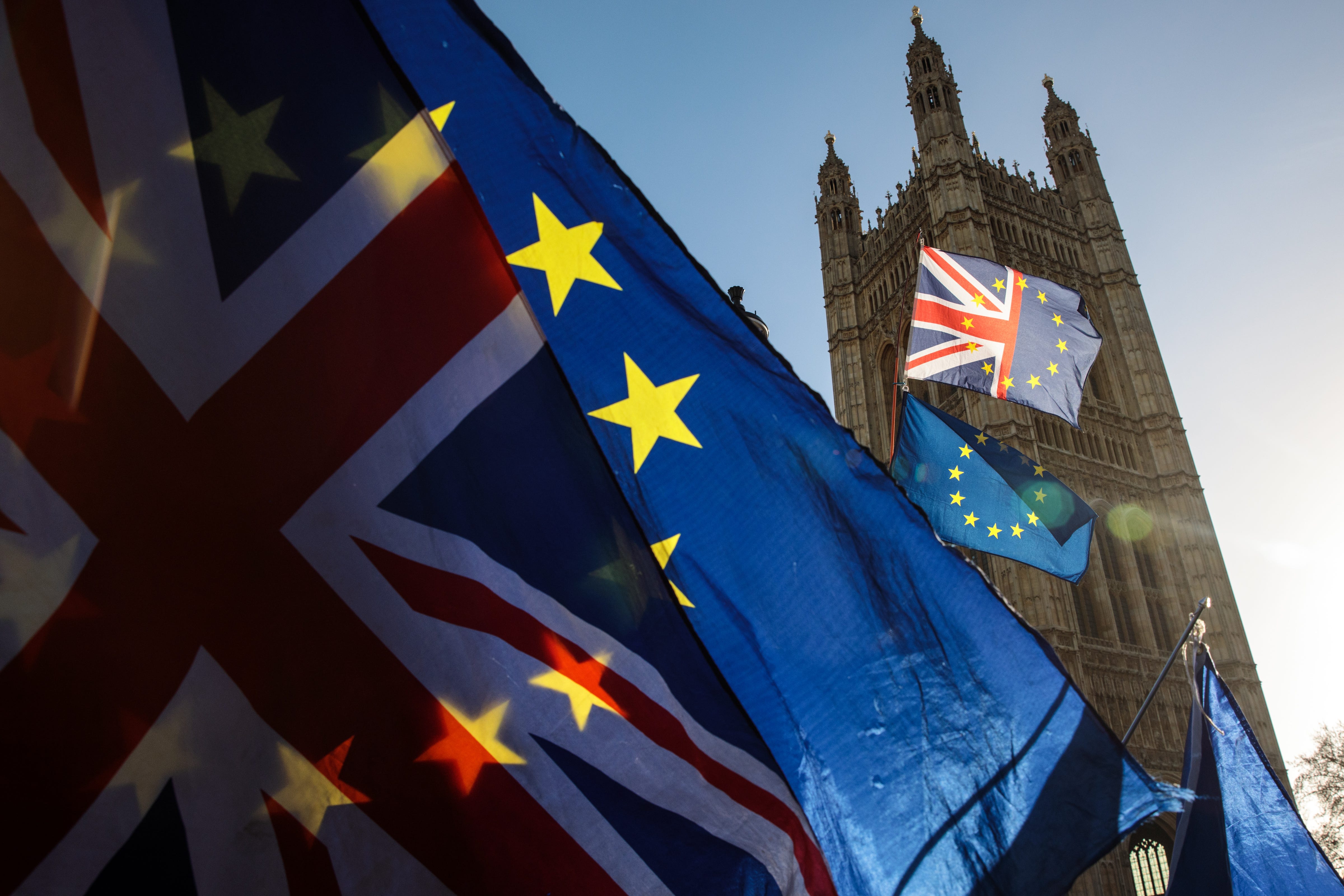
Ten years on from the Brexit referendum, what have we learned about the UK’s relationship with the EU?
Perhaps the first lesson, which the campaign and its aftermath illustrated all too clearly, is that the ‘glue’ that held the UK in the European Union was less adhesive than that which attaches other countries to membership. Virtually all member states have draped their membership of the economic bloc in an overarching political narrative. For the original six, that narrative was about war and peace (integrating coal and steel, as Robert Schuman put it, would make war unthinkable); for the countries of Southern Europe, membership sealed the journey from dictatorship to democracy; for the states of Central and Eastern Europe, membership meant coming home to Europe after the Cold War.
For the UK, on the other hand, membership of the EU was transactional and a question of economic gain. Attitudes towards membership tended to vary with domestic economic performance – if things were going well, support rose, if not, it fell (and the opposite holds true now that the UK has left). Consequently, not only did the Remain side have no story to tell, but the British felt sufficiently unattached to membership to turn out in numbers to vote to Leave.
A second lesson is how dependent a medium-sized open economy like the UK is on favourable international conditions. For many Conservative Brexiters, the UK’s exit from the European Union provided an opportunity to reassert itself as a buccaneering global trading nation. Speaking in Greenwich in February 2020, Boris Johnson spoke of Britain’s desire to go “out into the world ... re-emerging after decades of hibernation as a campaigner for global free trade.”
Even at the time, it was clear that trade deals with other countries would not compensate for the economic impact of leaving the EU, but there was at least a vision. It was, however, one that was quickly undermined by changes outside Britain’s control. Globalisation is not what it was. Our closest trading partners have adopted increasingly mercantilist approaches to economic policy. And Donald Trump has cast doubt on the reliability of the American security guarantee.
As a consequence, that vision of a buccaneering, free-trading ‘Global Britain’ has become something of a chimaera. Both the U.S. and the EU have erected barriers to trade. And increasingly, the need for European cooperation on security has drawn the UK back into negotiations about how best to work with our closest neighbours.
Which brings us to perhaps the starkest lesson. The utter naivety of those – including first and foremost David Cameron – who felt that holding a referendum would be a means to stop people ‘banging on about Europe’. Even if the referendum had gone the other way – imagine a 52-48 victory for Remain – this would not have been the case. It was clear that the Brexiters had the bit between their teeth, that the Conservative Party was riven, and that another referendum would have been only a matter of time.
As it was, the UK voted to Leave. And, having left the EU, we spend more time debating and worrying about it than we ever did as a member state. This was inevitable, and for several reasons. For one, the EU has never really figured out an effective way of dealing with its neighbours short of incorporation. The Swiss have long been telling anyone who cared to listen that their life is one endless negotiation about market access with the EU.
Yet it is not a question simply of the peculiarities of the EU. Any country that finds itself lumbered with a continental-sized neighbour is going to devote a significant amount of time and resources to keeping an eye on and dealing with that neighbour. The Canadians do it with the U.S. (more than ever these days). China’s neighbours are the same. And the UK is learning this lesson. Even outside it, the actions of the EU have significant implications for the UK. Our relationship with it – it is, after all, our largest trading partner – matters enormously.
And so perhaps we should not be surprised that the debate on UK-EU relations looks to be reawakening. Simply put, we are struggling to alight on a stable equilibrium. The situation now imposes significant economic costs – and it is not even as if the UK has systematically tried to deploy its newfound ‘control’ to increase its competitiveness. Rather, we continue to align, even though alignment does not bring with it market access.
Some would have it that a far closer relationship is the answer. Certainly, joining the EU’s single market, or even rejoining the EU itself, would do most to address the economic impacts of our decision to leave. However, the first would involve the UK becoming a rule-taker – effectively letting Brussels regulate the UK economy, with London having a right only to be consulted.
As for the latter, the approach of the 10th anniversary has seen a marked uptick in the number of people arguing for rejoin. And perhaps, ultimately, the country will decide that this is the best course of action. But we shouldn’t kid ourselves that it will be easy. The accession process will be a difficult and contentious one as Brussels tells the UK what it needs to do to join. The politics in the UK will, without a doubt, be poisonous. And the economic benefits will only materialise once the process is well advanced.
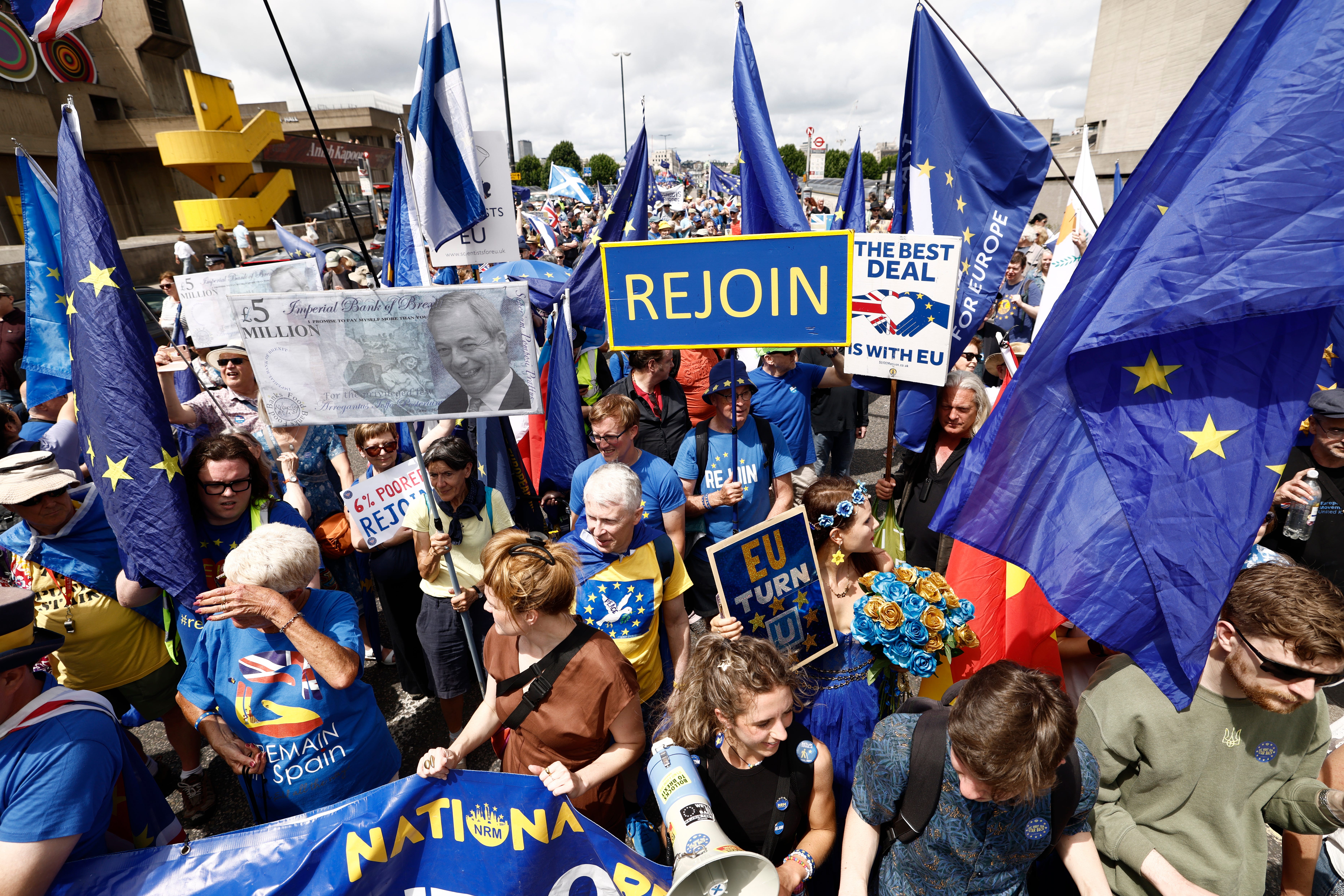
Meanwhile, we’d be rejoining an EU that has changed fundamentally since we left it. It is more protectionist. It has engaged in common borrowing to underwrite its COVID recovery funds. The European Commission now has a role in defence policy. These are all the kinds of things that the UK, as a member state, would have attempted to block. And they are all things we’ll have to swallow if we really want to head back in.
It’s not my place to say what the British people might one day prefer or to suggest which might be the optimal course of action. After all, I head an organisation committed to providing impartial analysis rather than political advice. But, 10 years on from that fateful referendum, what I can say is that the issue of Brexit is far from resolved.
Anand Menon is the director of UK in Changing Europe initiative and professor of European Politics and Foreign Affairs at King's College London.
The views expressed in this article are the author’s own and do not necessarily reflect those of Zeteo or Zeteo UK.
Check out more from Zeteo UK:


What will Burnham do (do, not say) about the EU, Gaza, free speech, public ownership, and progressive reform will determine the future of the UK. I hope he has the courage to get it right.
I voted Remain - but will not again. The undemocratic 'political' structures of the EU and especially its embrace of Israel and its lavish support for the war in Ukraine have made it clear to me that we are better off outside.
What we need is access to the Europoean economy while being politically independent. I don't want to see another decade lost by wrangling with people who, in the main, have no idea what they're talking about.
Britain's problems can only be addressed by long term planning - and our stop-start system of Government has failed us and so civil servants are now dictating policy (I used to be one). We used to believe that the first past the post system gave political stability. It did in the past but In the days when the population is diverse this has failed. People can only be united politically - and Starmer has demonstrated with clear but alarming naivity that its the belief that 'the Left' had no where to go but to support him is nonsense. So I think we need some kind of honest political discussion and only PR can provide that.