


A note from our Editor-in-Chief: Thank you for subscribing to Zeteo UK. We are publishing this piece without a paywall, but please do become a paid subscriber today so you can read and watch all of our Zeteo UK original content without hitting a paywall in the future – and also so you can help fund independent journalism in Britain. – Mehdi Hasan
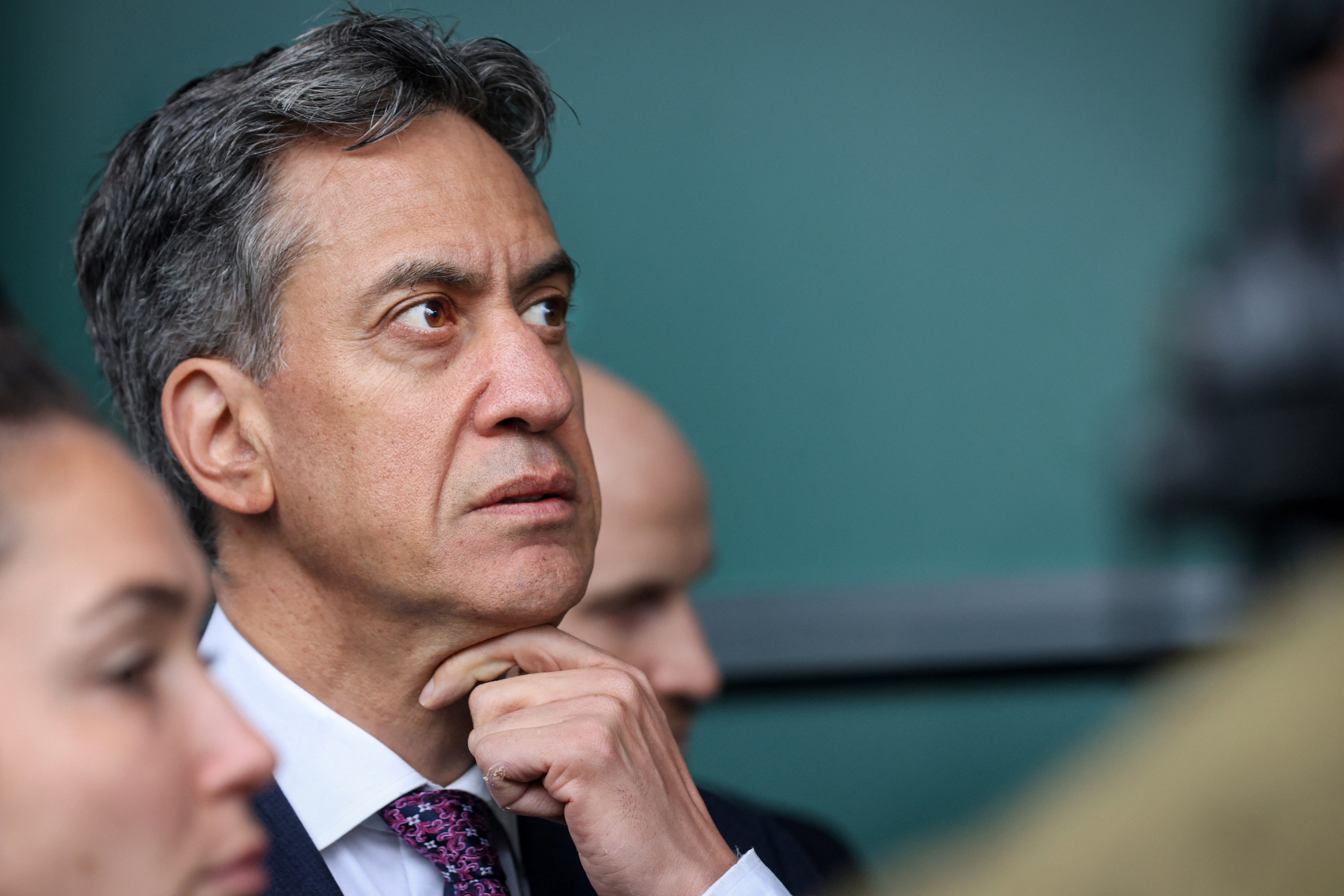
When Foreign Secretary Ed Miliband was seven years old, and a pupil at elementary school in Massachusetts during his father’s professorship at Brandeis University, he faced a tricky personal question from his new American teacher. Was he an Episcopalian? Hesitating, and not quite clear what that term actually meant, the young Miliband replied that he was. Upon returning home, he recounted what had happened to his mother, Marion, who threw her hands up in the air and said: “No! We’re Jewish.”
Yes, Ed Miliband is Jewish. He is the younger son of Holocaust survivors Ralph Miliband and Marion Kozak, who were not religious Jews but were “consciously and culturally Jewish”, as I wrote in the biography of Ed Miliband that I co-authored with James Macintyre over a decade ago. His parents “had been the victims of vicious antisemitism in Belgium and Poland, prompting their flight to the UK”. Ralph liked speaking Yiddish; Marion lived briefly in Israel as a child. Ed Miliband himself accompanied his mother to Israel on several occasions while growing up to visit his maternal grandmother in Tel Aviv, and he still has relatives living there today.
So it was a sight to behold on Tuesday: the Jewish foreign secretary announcing in the House of Commons an “import ban on goods from illegal settlements in the occupied territories” via a “new comprehensive sanctions regime”, in defiance not just of the Israeli government but the chief rabbi, leading British Jewish communal organisations and Jewish media organisations. “To those who finance or facilitate illegal settlements, let me say this: you will face the full force of UK sanctions,” he declared.
Chief Rabbi Sir Ephraim Mirvis, who met with Miliband last month, said he had warned the foreign secretary that a ban on settlement goods would be met with “deep dismay” in the UK Jewish community and “disproportionately affect British Jews”.
The Jewish Leadership Council said ahead of Tuesday’s announcement of a ban on Israeli settlement goods that it would have “a harmful impact on the UK Jewish community”.
Former Jewish Chronicle editor Jake Wallis-Simons accused Miliband of “siding with Hamas, effectively”.

And, after the foreign secretary said last week that he had met with people who had returned from Gaza and heard “horrific” stories about “medicines being blocked” and “children dying while waiting for vital life-saving treatment”, Jewish Chronicle columnist Stephen Daisley, who is not Jewish, accused Miliband, who is, of making a deliberately “incendiary” claim and playing “into tropes of Jews as child-killers”. (The truth is that what Miliband was told and relayed is what U.N. humanitarian agencies are saying: that Palestinians in Gaza continue to face “critical shortages of medicines” due to “Israeli access restrictions” and that “ongoing restrictions on humanitarian access continue to impede the delivery of life-saving assistance and the restoration of essential health services.”)
The real reason there is so much fury directed at Ed Miliband from supporters of Israel is that his position on settlements and on Gaza completely subverts the story they want to tell. The chief rabbi and some of Britain’s most prominent Jewish communal organisations want the British public to believe that this proposed ban on trade with illegal Israeli settlements is not just counterproductive and hostile to Israel but dangerous and harmful to British Jews. In fact, the go-to move for the Jewish state’s loudest online defenders is to accuse any and all critics of the Israeli government’s policies of antisemitism. Yet Miliband is himself Jewish, the grandchild of an Israeli grandmother, who stood in Parliament on Tuesday and insisted that Israeli violations of international law, ongoing settler violence and terror, and the undermining of any possibility of Palestinian statehood matter. That makes it particularly difficult for his pro-Israel critics to dismiss him with the all-too-familiar suggestion that a British politician’s opposition to Israeli government policy must be driven by some secret hostility towards Jews and Judaism.
To be clear: Miliband’s Jewishness does not make him a more effective defender of Palestinian rights, nor does it make him immune from all criticism. What it does is expose the lie that opposition to Israeli policies is antisemitic. It exposes the lie that the British Jewish community is a monolith. It shows the world that a British Jewish foreign secretary can care about Israeli security while treating occupied Palestinians as human beings entitled to the same dignity, rights and freedom as ordinary Israelis. That is, perhaps, what makes his stance on settlements and on Gaza so threatening to so many advocates for Israel: Miliband demonstrates, simply by taking this position, that Jewish identity, attachment to Israel and an unrelenting recognition of Palestinian humanity are not necessarily contradictions.
It also reminds us that Ed Miliband is not a politician you write off. His political career was supposed to have ended in ignominy after he led Labour to defeat in the 2015 general election. And yet here he is, more than a decade later, serving as foreign secretary in a Labour government, tearing up “the script on British foreign policy”, as Middle East Eye’s Peter Oborne and Imran Mulla wrote on Monday, and “showing unusual determination amid the onslaught of threats and criticism”. No other foreign secretary in the 21st century, they argue, “has ever successfully challenged either the power of the White House or pressure from Israel – let alone both at once”.
This is a key point. The announcement today by Miliband, and his boss, Prime Minister Andy Burnham, doesn’t go far enough in my view, or in the view of most Palestinians and human rights groups. Some British diplomats have reportedly “told the U.S. that the new sanctions … are largely symbolic”. As Francesca Albanese, the United Nations Special Rapporteur on the occupied Palestinian territories, told the Guardian, a settlement trade ban would have to be part of “a true paradigm shift to Israel-Palestine that ultimately seeks to implement the International Court of Justice advisory opinion in 2024”, which declared Israel’s presence in the occupied territories to be “unlawful in its entirety”. Per that opinion, Albanese said, “all states carry an obligation – not a preference of an obligation – not to recognise the situation as legal, and not render aid and assistance in maintaining it”.
Nevertheless, within the UK political context, we should not underestimate the significance of this move. For decades, British governments have gone through the motions of condemning Israel’s settlements as illegal while always stopping well short of imposing any serious economic consequences on Israel. Miliband and Burnham are making an extraordinary break with decades of British policy.
They are also making a clear break with both the Netanyahu government and the Trump administration. The reaction of the latter is proof positive of that. U.S. Ambassador to Israel Mike Huckabee, who isn’t Jewish, has accused Ed Miliband, who is, of “Jew hate”.
“The Brits have lost it,” he posted on X last week. “The Jew hate of their government knows no boundaries and knows no facts.”
But such inflammatory rhetoric increasingly lacks the power it once possessed. Most people are fed up with weaponised allegations of antisemitism from fanatical supporters of Israel. It is especially ridiculous to accuse a proud Jewish politician of “Jew hate”.
Some on the pro-Israel side might question my use of the word “proud”. They might want to dismiss bacon-sandwich-eating atheist Miliband as a “Jew in name only” or as “Jewish as a ham sandwich”, to borrow a pejorative from pro-Israel extremist Ben Shapiro.
Miliband, however, has long rejected this argument and has never, in fact, disowned his Jewish heritage. “How can my Jewishness not be part of me?” Miliband wrote in the New Statesman back in 2012. “It defines how my family was treated. It explains why we came to Britain.” On Tuesday afternoon, the foreign secretary said he was issuing his statement to Parliament on Israel’s “unlawful” occupation and “illegal” settlements “as a proud British Jew”.
Miliband’s very left-wing and very Jewish mother, Marion, who passed away in May and who was a signatory on the founding statements of both Jews for Justice for Palestinians (JfJfP) and the anti-Zionist Independent Jewish Voices (IJV), would certainly have been very proud of her youngest son this week.
‘Ed: The Milibands and the Making of a Labour Leader’ was co-authored by James Macintyre and Mehdi Hasan and first published in 2011. It is available for sale here.
More from Zeteo UK:


The 'leaders' who have so hysterically attacked Ed Miliband have finally, irreparably exposed their big lie: they are not merely 'pro-Israel', they are unashamedly pro Genocide. "Siding with Hamas, effectively"? What petulant drivel. No Hamas was required in the West Bank for Israeli thugs to launch their latest pre-emptive Holocaust. How sad when its leaders let a community down. Starmer's stance was designed to tell the world that Britons cared not one fig for human rights, that Britain stood with racist Genocidaires, and every evil was okay so long as there was a shekel to be made. Ed Miliband has exposed that lie. Thank you, Mr. Miliband.
This needs to be a starting point for a more humanitarian response to plight of the Palestinians.