


Note from our Editor-in-Chief: This week, Zeteo UK is running a special series – ‘Hate in the UK: British Muslims Under Fire’. This deep dive into British Islamophobia continues with the results of our exclusive survey of UK adults’ understanding of Islam and Muslims, which reveals shocking levels of ignorance and anti-Muslim sentiment. Follow the series throughout this week for exclusive news stories, reported pieces and interviews. This piece is offered without a paywall – but if you’re not already a paid subscriber, become one today to get full access to all of Zeteo UK’s ‘Hate in the UK series’ and more.- Mehdi
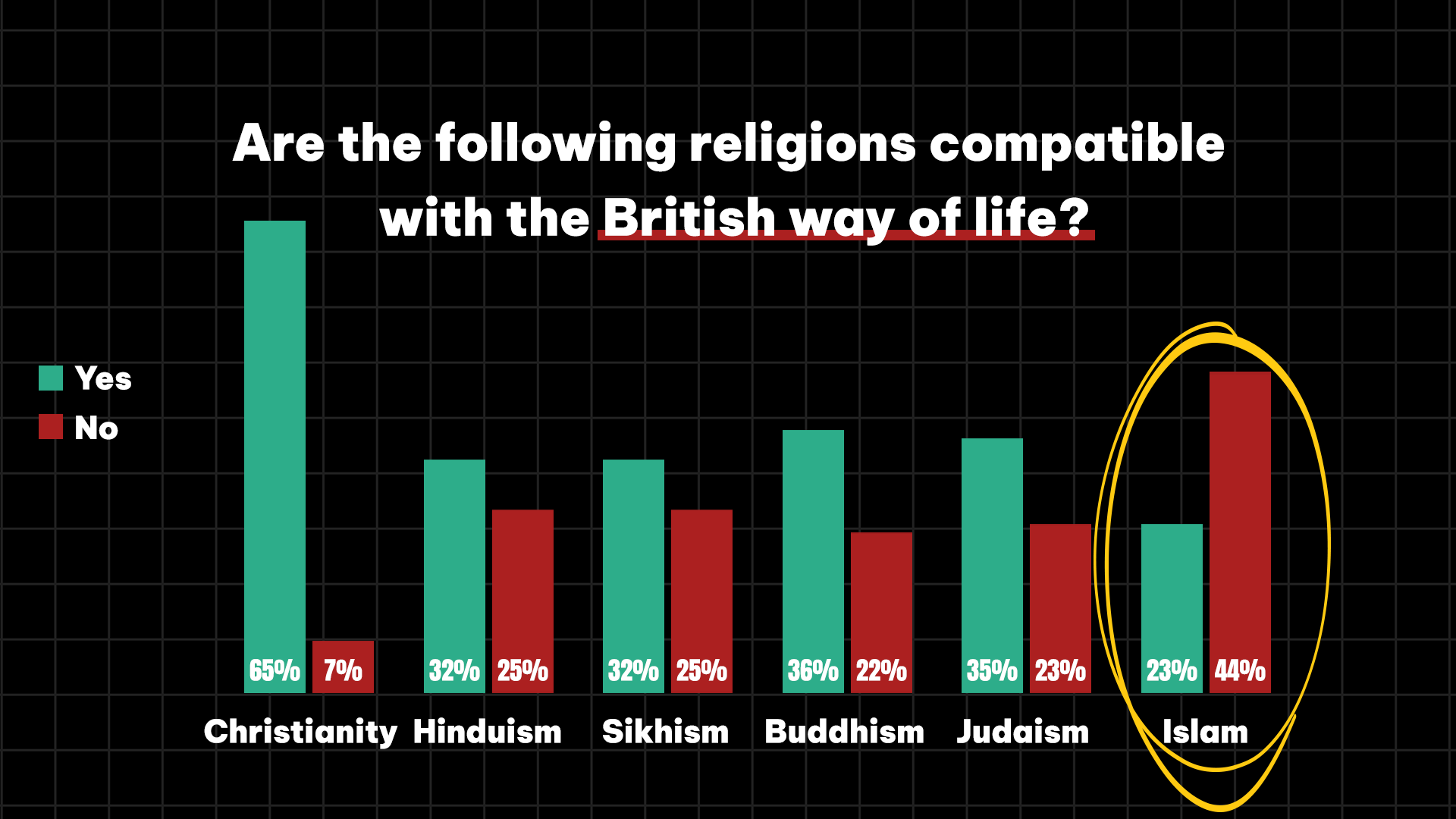
Nearly half of all British adults believe that Islam is incompatible with the “British way of life” according to new polling for Zeteo UK. The poll shines a spotlight on the stark differences in public attitudes towards the country’s major religions, as well as some major misconceptions about Muslims and Islam.
Only 23% of UK adults think Islam is compatible with the British way of life, while 44% said Islam was not compatible. This is strikingly different to how other major religions were considered. Almost two thirds (65%) of the respondents said Christianity was compatible, while around a third felt the same about Buddhism (36%), Judaism (35%), Hinduism (32%) and Sikhism (32%).
The polling, which was conducted by Opinium on behalf of Zeteo UK, has been described by the Muslim Council of Britain (MCB) as a “reflection of how years of anti-Muslim rhetoric and misinformation have shaped public perceptions.”
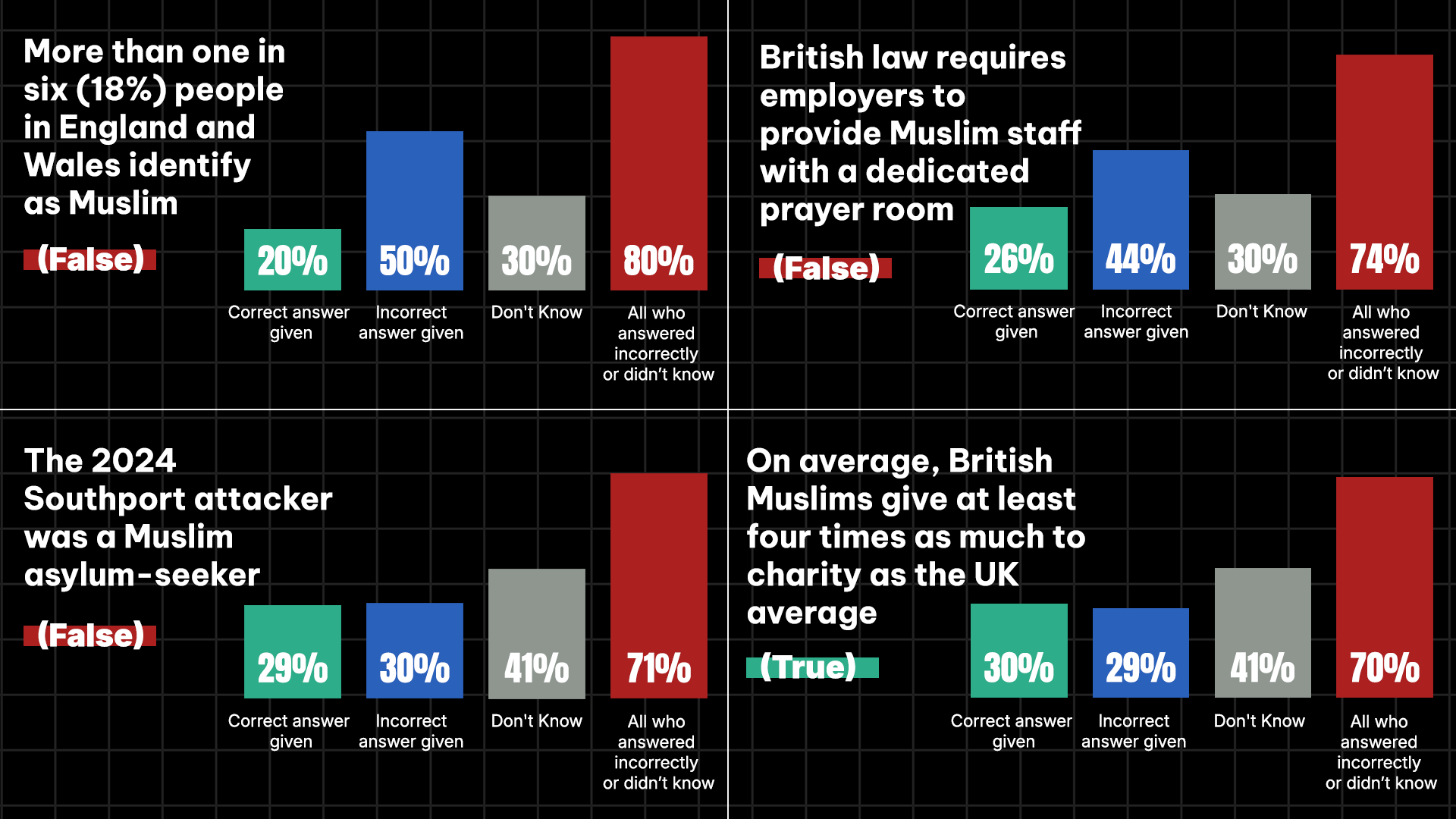
The polling also points to a widespread belief in falsehoods about Muslims in Britain. Of the 2,050 UK adults surveyed, half overestimated the number of Muslims in Britain, believing that more than 1 in 6 people in England and Wales identify as Muslim. It is in fact far fewer – around 1 in 15.
Similarly, a third of UK adults (30%) thought that the 2024 Southport attacker was a Muslim asylum-seeker. That false information was widely circulated online at the time of the attack (in fact, Axel Rudakubana’s background is Christian and he was born in Wales).
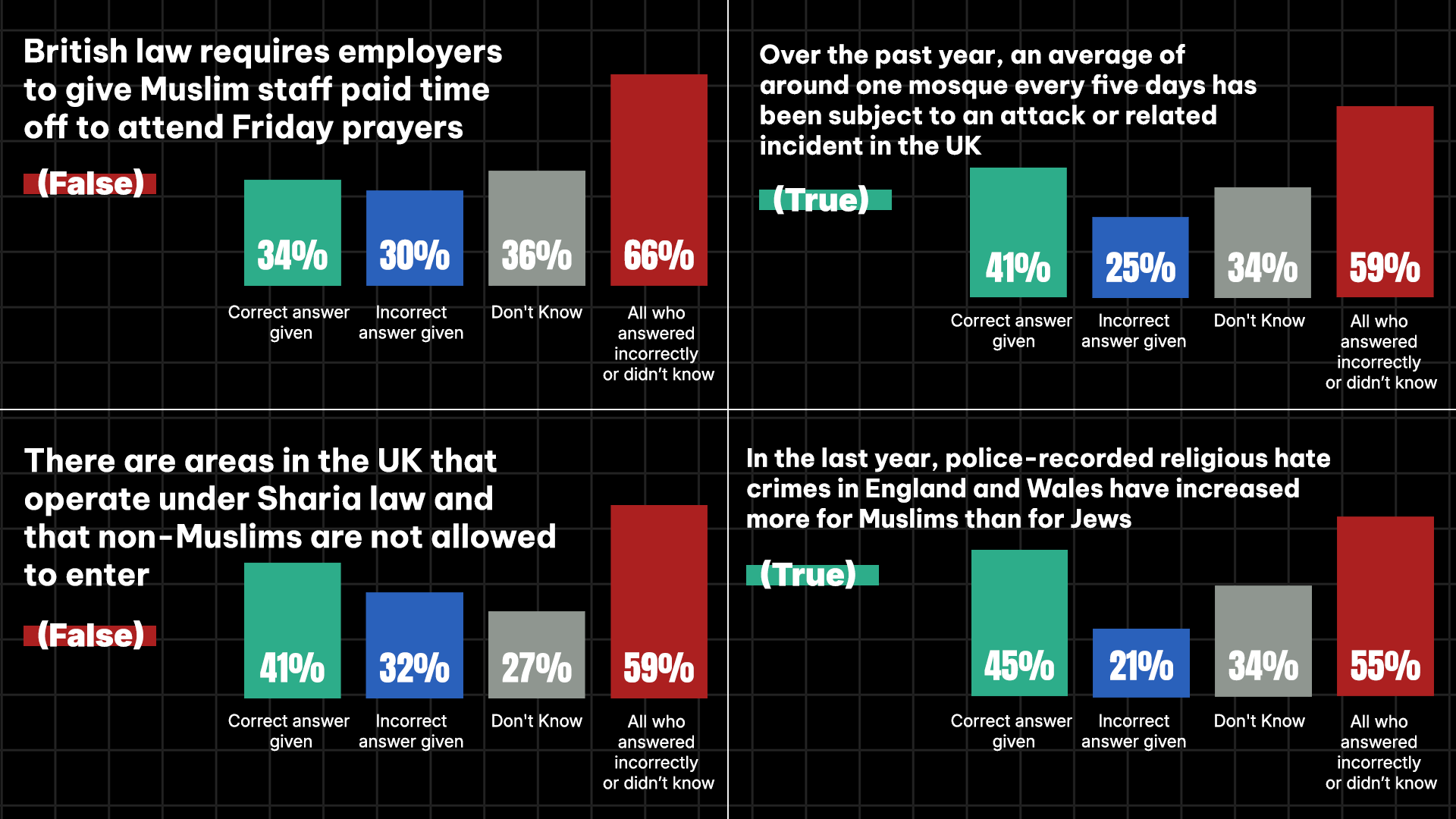
There was also widespread confusion around the role of Sharia law in the UK. A majority (59%) of the participants either believed there are “no-go” areas of the UK operating under Sharia law where non-Muslims are banned from entering, or were unsure if that was the case. This is, of course, not true.
A spokesperson for Amnesty International UK described this confusion as “sadly not surprising”, saying: “Misinformation, disinformation and outright hostility against Islam perpetuated in politics and populist narratives have contributed to creating a national emergency of Islamophobia.
“Violence against Muslims in the UK is on the rise and in the last year we have seen horrific attacks including racially aggravated rapes, arson and attempted firebombing of mosques and more.”
The polling also tested the UK public’s awareness of these “horrific attacks”. It is a fact that, over the last year, there were more police-recorded religious hate crimes targeting Muslims in England and Wales than there were targeting Jewish people – but more than a third of the poll participants thought this was false.
It’s also true that, on average in the past year, a mosque is subjected to an attack or related incident every five days. A quarter of people didn’t believe that this was true.
Many of those polled did, however, believe Muslims receive special treatment. For example, our poll found that nearly three quarters of UK adults believe that British law requires employers to provide Muslim staff with a dedicated prayer room, or don’t know if this is the case. This is false. Another two thirds also believe, or are unsure whether British law requires employers to give Muslim staff paid time off to attend Friday prayers. This is also false.
The polling also revealed widespread disbelief of positive claims about British Muslims. Seventy per cent of UK adults either did not believe, or did not know, that British Muslims give at least four times as much to charity as the UK average. This is, in fact, true.
The findings expose a generational, geographical and political divide.
Younger people were most likely to be open to the idea that Islam was compatible with the British way of life, with 3 in 10 18-34-year-olds holding this opinion. Only 1 in 7 of those over the age of 65 felt the same.
In terms of geography, 34% of Londoners felt Islam was compatible with the British way of life. This changed drastically outside of the capital. Only around 1 in 7 (14%) of adults in Northern Ireland and fewer than than 1 in 5 (18%) of adults in Scotland felt Islam was compatible.
Unsurprisingly, political affiliation also had an impact on our poll results. Green Party supporters were more likely to consider all religions as compatible with British life. Whereas, Reform UK supporters were more sceptical than other political groups to consider any religion compatible. Christianity did the best with Conservative voters – 75% of them were most likely to say the faith aligned with British values.
Our polling paints a troubling picture. Public rhetoric around Muslims and Islam has created strong opinions on the religion, but with little understanding of the people who practise it. It raises uncomfortable questions around how deeply entrenched the stereotypes about British Muslims are and raises concerns around the extent of the misinformation that shapes public attitudes.
An MCB spokesperson said that the poll results “should prompt some reflection within government, our media and political institutions, where the idea that being Muslim and being British are somehow competing identities has too often been repeated rather than challenged”.
More from Zeteo UK’s series ‘Hate in the UK: British Muslims Under Fire’:


Our Newspapers are directly responsible for this misinformation, mistrust and fear. Politicians have been equally responsible for using inflammatory rhetoric and failing to take Islamophobia as seriously as antisemitism.
One of the things that may drive this difference is the perception that more Muslims are more devout than other religions. We all know people who identify from each of these religions who are maybe non practising or moderate in their beliefs. All religions are incompatible with the "British Way of Life" when people take the teachings to extremes. Henry the Eighth's view of Christianity had people burnt at the stake, extremist jews believe some exceptionally nasty things which are incompatible with any modern society's way of life and laws. Thankfully there aren't many extremists living in the UK but the perception is that there are many more extremist Muslims (Sharia law etc) which troubles people.