


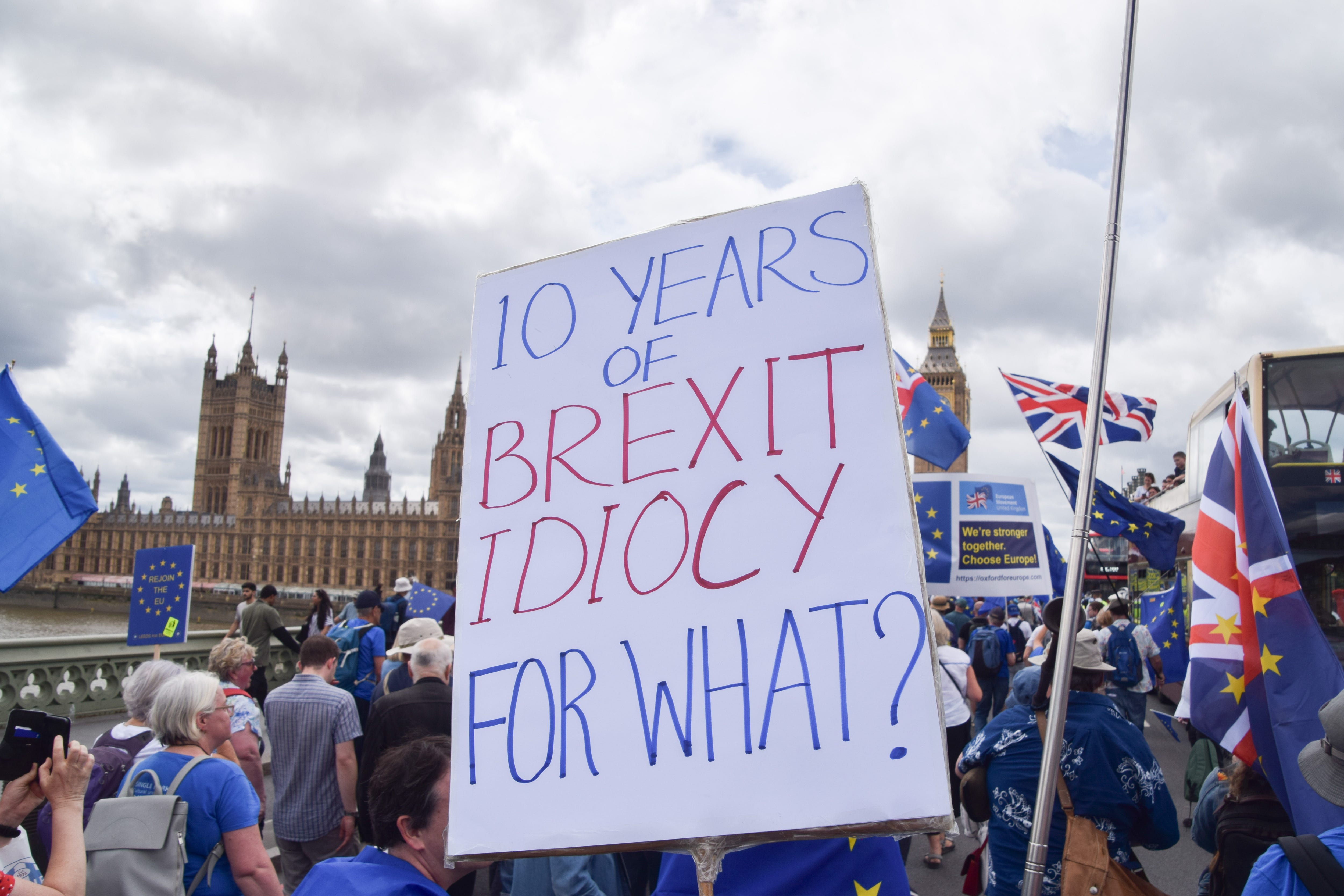
It was perhaps the most astonishing act of voluntary self-harm in modern British history.
Brexit.
Ten years ago today, 17,410,742 people voted in a nationwide referendum for the UK to leave the European Union. Around 5 million of them were aged 65 or above, backing Leave over Remain by a ratio of 2 to 1. In the decade since the vote, according to the Times, an “estimated 3.7 million Leave voters — nearly a fifth of the total — have died, compared with 2.1 million Remain voters.” According to the Financial Times, “another 6 million people have become old enough to vote since 2016, and these younger voters back rejoining the EU over staying out by a large margin.”
Which means that today, there is no longer a majority in favour of Brexit.
Don’t take my word for it. Look at the polling. A recent poll by YouGov, for example, found that 55% of people in the UK want to rejoin the EU, compared with just 35% who want to stay out. Ipsos found a similar split: 52% in favour of returning, versus 33% opposed. That’s roughly a 20-point lead for Breturn – compared with the much narrower four-point margin in the referendum that delivered Brexit in the first place.
And if you really want to get a sense of just how unpopular Brexit has become a decade on, consider this: even one in four (23%) Leave voters now say they want to rejoin the EU, according to the YouGov poll.
Astonishing, right?
Then again, perhaps not. Not when you remember all the promises that were made but not kept. What exactly did the architects of Brexit think would happen when the brazen falsehoods they peddled during that bitter 2016 campaign collided with… reality?
£350 million a week for the NHS instead of for Brussels? It was a slogan emblazoned on the side of the ‘Vote Leave’ campaign bus. And yet Nigel Farage, ‘Mr Brexit’ himself, disowned it just hours after the vote on 23 June 2016, telling reporters: “I would never have made that claim, and it was one of the mistakes that the Leave campaign made.” That £350 million a week for the NHS never materialised. Instead, Britain saw a mass exodus of EU healthcare workers while NHS waiting lists climbed to a peak of 7.7 million in 2023.
Take back control of our borders? The single biggest issue for Leave voters in 2016 was immigration. And yet net migration to the UK reached record levels after Brexit, not before. It hit a whopping 944,000 in 2023, driven by a sharp increase in non-EU migration. That same year, a report from Durham University found that the record number of asylum-seekers reaching the UK in small boats was a direct consequence of the “failure to secure a post-Brexit returns arrangement with the EU”.
New trade deals, including with the United States? There is still no sign of a comprehensive, sweeping, US-UK free trade deal in the offing. The then Trade Secretary Liam Fox had claimed there would be 40 new trade deals “ready for one second after midnight”. They weren’t. The UK eventually negotiated around 70 trade deals in the wake of Brexit, but the vast majority were “rollover” or “continuity” deals that replicated pre-existing EU terms. We’re also still subject to significant non-tariff barriers in our post-Brexit trade with the EU itself.
So the economic costs of Brexit continue to pile up. Study after study has shown how Britain’s departure from the European Union has led to slower growth, higher prices, reduced living standards and weaker trade.
And then there is the political turmoil. Six different prime ministers since 2016. The Conservative Party on its sixth leader since the referendum. The Labour Party preparing for its third. The rise and rise of Reform UK and the ongoing weaponisation of race and immigration by the far-right.
The question is no longer whether Brexit worked.
It didn’t.
The question is whether Britain is prepared to admit it and correct the mistake. Because countries, like individuals, can be wrong. And when they’re wrong, they should change course.
So let me be absolutely clear: it is time for the United Kingdom to rejoin the European Union. We need a serious, energetic, unapologetic campaign to replace Brexit with Breturn.
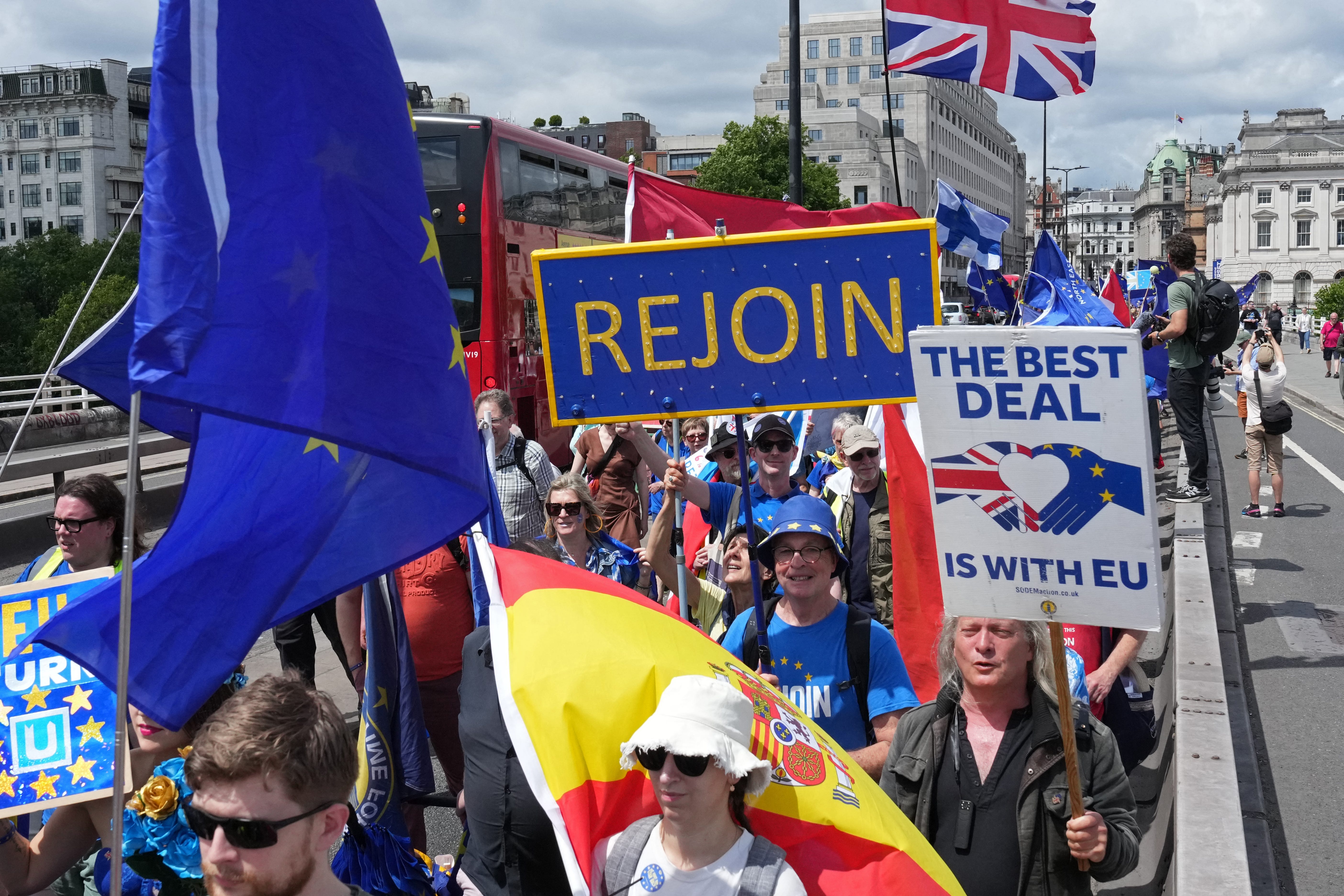
Does that sound fanciful? Delusional? Impossible even? More fanciful, delusional or impossible than Brexit sounded when Nigel Farage first proposed leaving the EU in a speech to the European Parliament in 1999?
The truth is that rejoining the EU will be easier than leaving it. And, before you ask, let me deal with the obvious objections.