

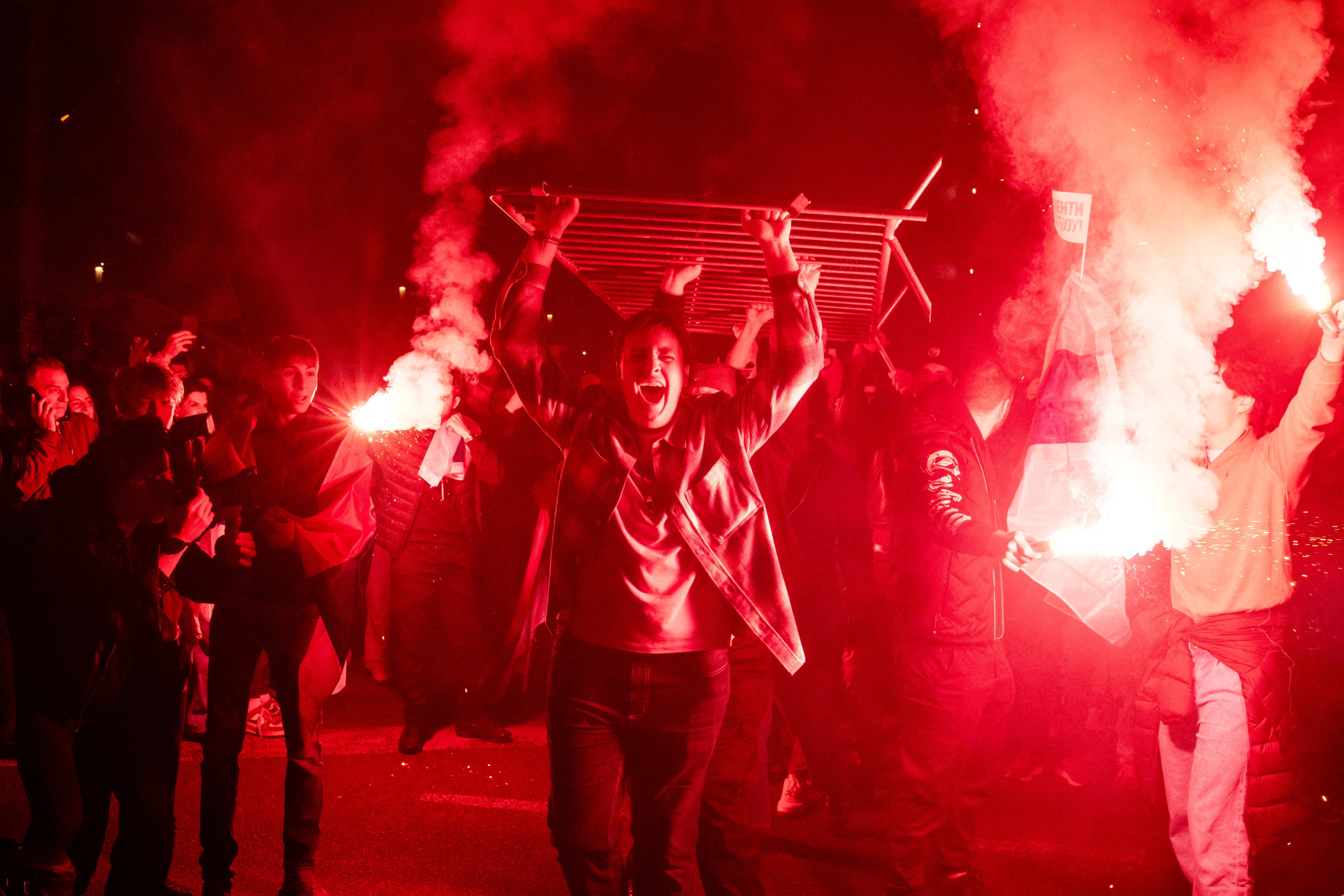
Few expected election night in Serbia to end peacefully on Sunday. Yet the country’s longtime leader Aleksandar Vučić, after 14 years at the helm, took to the airwaves to concede defeat shortly after polls closed. In a rambling speech, he told the nation that up to 140 of the 250 members of the new parliament would come from the Student List, the electoral vehicle established by the student movement that had led two years of mass protests against his rule. With that announcement, it was over, and scenes of joy and festivities spread across Serbia late into the night.
As in The Lord of the Rings, when Sauron’s fall sent his armies scattering and his dominion crumbling, Vučić’s vast apparatus of control and repression seemed to dissolve literally overnight. Footage captured by Al Jazeera showed protesters jeering and throwing objects at a police convoy as it withdrew from central Belgrade. It was a striking reversal of roles, after the heavy policing that met anti-government protests over the past two years.
Over the following 24 hours, hated symbols of the regime were hastily dismantled by emboldened crowds. Citizens stormed the premises of the pro-regime Informer TV, confronting Dragan Vučićević, its widely despised editor. Protesters tore down tents in so-called Ćacilend, an encampment of lumpen extras, likened by some to a pro-regime garrison, guarding the Serbian presidency building.
But the sense of reckoning did not end there. Social media across the country recorded footage of the removal of portraits of Vučić from the offices of state-appointed directors in the public sector. People have begun to reverse the atmosphere of fear and intimidation that they endured for years in their workplaces as well as on the streets.
The movement, sparked by the deaths of 16 people in the collapse of the Novi Sad railway station canopy in November 2024, has travelled an extraordinary distance in less than two years, turning a demand for accountability over a disaster associated with corruption and negligence into a successful challenge to one of Europe’s most entrenched political regimes. As student-led movements have spread across Europe, from Albania and Italy to France and Belgium, the movement in Serbia has been held up as a blueprint for victory.