
Zeteo UK

Zeteo UK

Westminster Mocks Nigel Farage, But He May Get the Last Laugh in Clacton

In a political system where so many feel left out and left behind, denying voters the chance to vote for the main political parties in tomorrow's by-election risks boosting Reform's support.

Carys Afoko's avatar
Carys Afoko
Aug 12, 2026
∙ Paid

A note from our Editor-in-Chief:

Thank you for subscribing to Zeteo UK. We are still in soft-launch mode till September as we finish recruiting our team, but given the craziness of the British news cycle right now, we will be publishing stories and op-eds on a semi-regular basis between now and then. Please do become a paid subscriber today so you can read and watch all of our Zeteo UK original content without hitting a paywall – and also so you can help fund independent journalism in Britain. - Mehdi Hasan
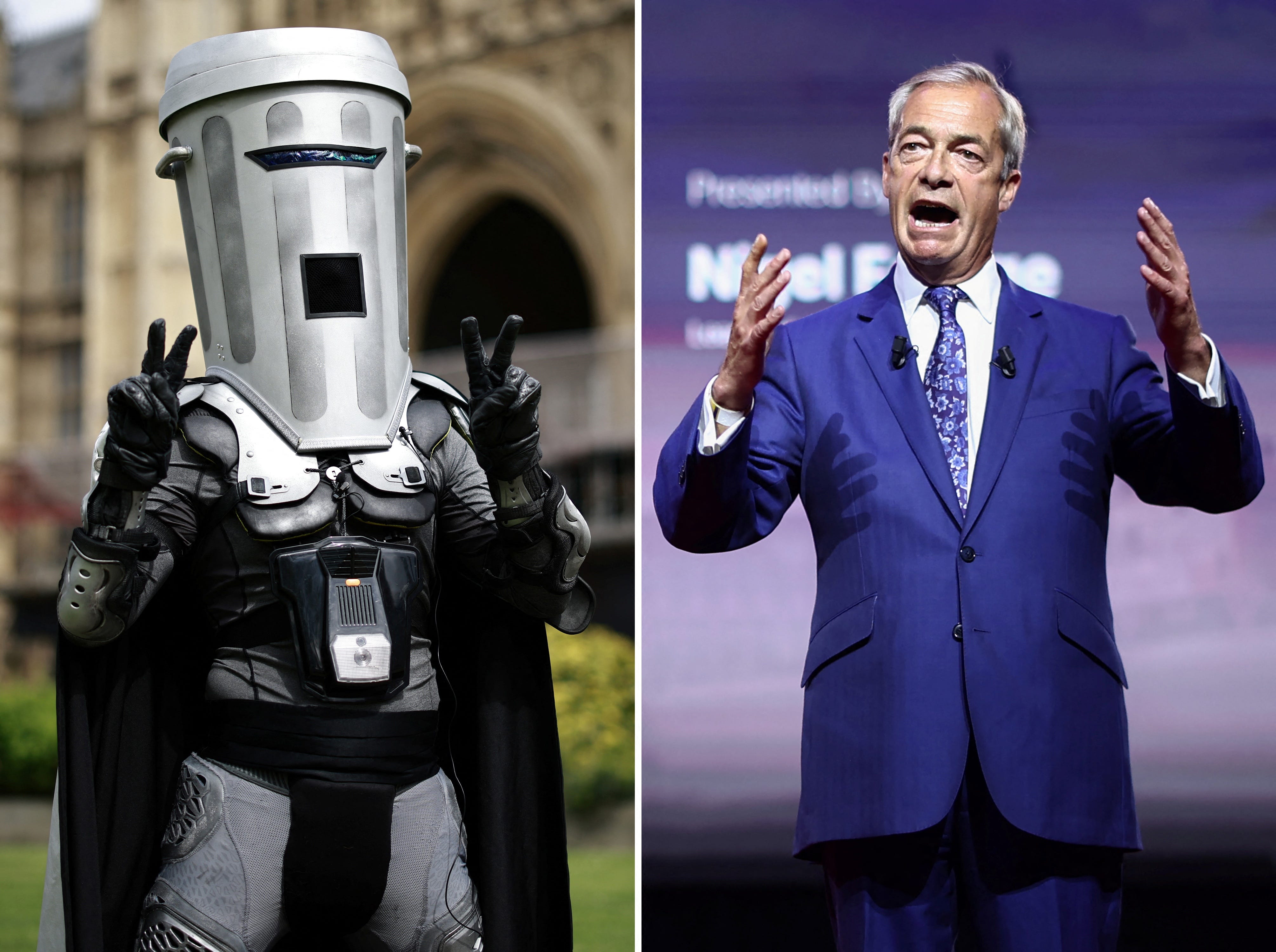
Count Binface (left) and Nigel Farage, two of the 34 candidates in the Clacton by-election. Photo by Henry Nicholls / AFP via Getty Images

On Thursday 13 August, voters in Clacton will unfurl the longest ballot paper in electoral history to elect a new MP. Who will probably be their old MP. All signs point to Reform leader Nigel Farage winning the by-election he triggered. Mired in financial scandals, most notably an investigation into the £5 million “gift” he received but did not declare from donor Christopher Harborne, Farage resigned to force a by-election to change the conversation and get back some of his political momentum.

Reform insiders predict their boss will win 70%–75% of the vote. Part of the reason they are so confident despite static poll numbers and a series of investigations into dodgy donations is the competition.

A note from our Editor-in-Chief:

Thank you for subscribing to Zeteo UK. We are still in soft-launch mode till September as we finish recruiting our team, but given the craziness of the British news cycle right now, we will be publishing stories and op-eds on a semi-regular basis between now and then. Please do become a paid subscriber today so you can read and watch all of our Zeteo UK original content without hitting a paywall – and also so you can help fund independent journalism in Britain. - Mehdi Hasan

Count Binface (left) and Nigel Farage, two of the 34 candidates in the Clacton by-election. Photo by Henry Nicholls / AFP via Getty Images

On Thursday 13 August, voters in Clacton will unfurl the longest ballot paper in electoral history to elect a new MP. Who will probably be their old MP. All signs point to Reform leader Nigel Farage winning the by-election he triggered. Mired in financial scandals, most notably an investigation into the £5 million “gift” he received but did not declare from donor Christopher Harborne, Farage resigned to force a by-election to change the conversation and get back some of his political momentum.

Reform insiders predict their boss will win 70%–75% of the vote. Part of the reason they are so confident despite static poll numbers and a series of investigations into dodgy donations is the competition.

There are 34 candidates standing in Clacton, but none of them from the main political parties. Instead, the record-breaking ballot paper, which will be 90 cm (3 feet) long, is filled with independents, local activists and a mix of novelty and serial candidates. The Monster Raving Loony Party are standing three separate people. Actor-turned-far-right-agitator Laurence Fox has thrown his hat in the ring. The most serious contender after Farage is Count Binface, an “intergalactic space warrior” formerly known as Lord Buckethead. A man who normally campaigns dressed as a fox pulled out of the race, calling it a circus.

The calculation made by the Conservatives, Labour, the Lib Dems and the Green Party is that by not standing in the Clacton by-election they make a mockery of Farage. Rachel Reeves cracked a joke about the Reform leader choosing to spend his summer “arguing with a bin”. Kemi Badenoch accused him of throwing a “hissy fit” when she confirmed the Conservative Party would not contest the seat. Another reason the mainstream parties have decided to sit this one out is that there is scope for a second by-election. If the parliamentary investigation into Farage’s conduct (currently paused) sanctions him, he will be vulnerable to a recall petition, which would trigger … another by-election.

Share

The Westminster bubble has decided this by-election is a sideshow. But what if they’re wrong? Farage is a canny operator who is consistently underestimated by the political mainstream. When he announced he was resigning his seat his rhetoric was clear, the election would be the people vs. the establishment. What better way to confirm that than for the main political parties (which Farage dubs the “uniparty”) to vacate the field? Farage is not popular nationally, but people who support him are likely to see attacks on him in a different light. A recent opinion poll found most voters don’t agree Farage is a “victim of the political establishment”. With one exception: 66% of Reform voters think he is a victim, and that number has not gone down in the wake of his financial scandals.

Campaigning is where Farage is in his element. Anyone following his TikTok over the last few weeks will have seen slick videos of him pounding pavements, knocking on doors and bumping into local residents who cheer him on. One man gives him a hug and urges him not to “let the bastards get you down … they’re only out to get you because you’re right”. Farage is the most followed UK politician on TikTok, reaching an audience of 1.5 million. While the campaign hasn’t ended speculation about his and Reform’s finances, it has meant he’s swapped being grilled in television studios for admiring marrows.

Share

In a political system where so many feel left out and left behind, should voters in Clacton have been denied the chance to vote for the main political parties? It may get laughs in the House of Commons and on social media, but focus groups in the constituency tell another story. “They’ve written us off, haven’t they?” one voter said of Labour and the Conservatives. Others talk about the established parties being scared of Farage: “They got their arses whipped at the last election. They didn’t actually have anyone they thought could beat him”. Conservative voters in the focus group were particularly frustrated. That may be why Tory leader Kemi Badenoch has written an open letter to the constituency promising to stand next time there is an election. It feels a bit like too little, too late.

This has been the year of the by-election. In February 2026, the Green Party stunned Westminster insiders by winning in Gorton and Denton. Their candidate Hannah Spencer defeated the Labour Party and Reform decisively, prompting a Green surge in the polls and a wave of new members joining the party. Four months later, another set of by-elections took place in Arbroath and Broughty Ferry, Aberdeen South and Makerfield. Makerfield was Andy Burnham’s audition to take over as prime minister, and it was a successful one; within days of the result, Keir Starmer announced his resignation. The counts in Scotland attracted less attention, but Douglas Lumsden’s win in Aberdeen marked the Scottish Conservatives’ first Westminster by-election win in more than 50 years, taking the seat from the SNP. Each vote so far has done more than send an MP to Westminster; it’s sent a message about our political system.

For those of us who fear the rise of Reform, these by-elections have been a test of whether the anti-Reform vote can mobilise and organise to keep the far-right party from power. In Gorton and Denton, Makerfield, Aberdeen South and Arbroath and Broughty Ferry, it could and did. This year, people across the UK have shown time and again they will vote tactically to keep Farage’s party out of Westminster. But voters in Clacton have been denied that chance. Instead, activists have had to channel their energy towards a candidate whose manifesto is at best satirical and at worst slightly mocking their hometown. Maybe no mainstream political party can beat Farage in Clacton this time, but that doesn’t mean there was no reason to try.

When Andy Burnham took the stage after winning his parliamentary seat, he introduced the idea of a Makerfield test “to make sure that the places Westminster has neglected will now get fairness”. The vote in Clacton clearly fails that test. On Friday morning, Nigel Farage will take to the stage in Clacton-on-Sea and, unless Count Binface pulls off the political upset of the century, regain some political momentum. What if, instead of seeming like a joke, Nigel Farage seems like the only person taking the people of Clacton seriously?

Share

Carys Afoko is a writer and host of the ‘Over the Top, Under the Radar’ podcast.

The views expressed in this article are the authors’ own and do not necessarily reflect those of Zeteo UK.

More from Zeteo UK:

Mehdi Meets Count Binface

Mehdi Meets Count Binface

Mehdi Hasan and Team Zeteo
·
Aug 11
Watch now
Pitting Jews Against Muslims Only Fuels the Far Right. Can Burnham Do Better Than Starmer?

Pitting Jews Against Muslims Only Fuels the Far Right. Can Burnham Do Better Than Starmer?

Emily Hilton
·
Aug 11
Read full story
There Will Be No 'Keminaissance' for the Tories

There Will Be No 'Keminaissance' for the Tories

John McTernan
·
Aug 3
Read full story
Carys Afoko's avatar
A guest post by
Carys Afoko
Writer and host of over the top under the radar podcast
Subscribe to Carys
© 2026 Zeteo UK · Privacy ∙ Terms ∙ Collection notice
Start your SubstackGet the app
Substack is the home for great culture