


A note from our Editor-in-Chief:
Thank you for subscribing to Zeteo UK. We are still in soft-launch mode till September as we finish recruiting our team, but given the craziness of the British news cycle right now, we will be publishing stories and op-eds on a semi-regular basis between now and then. Please do become a paid subscriber today so you can read and watch all of our Zeteo UK original content without hitting a paywall – and also so you can help fund independent journalism in Britain. - Mehdi Hasan
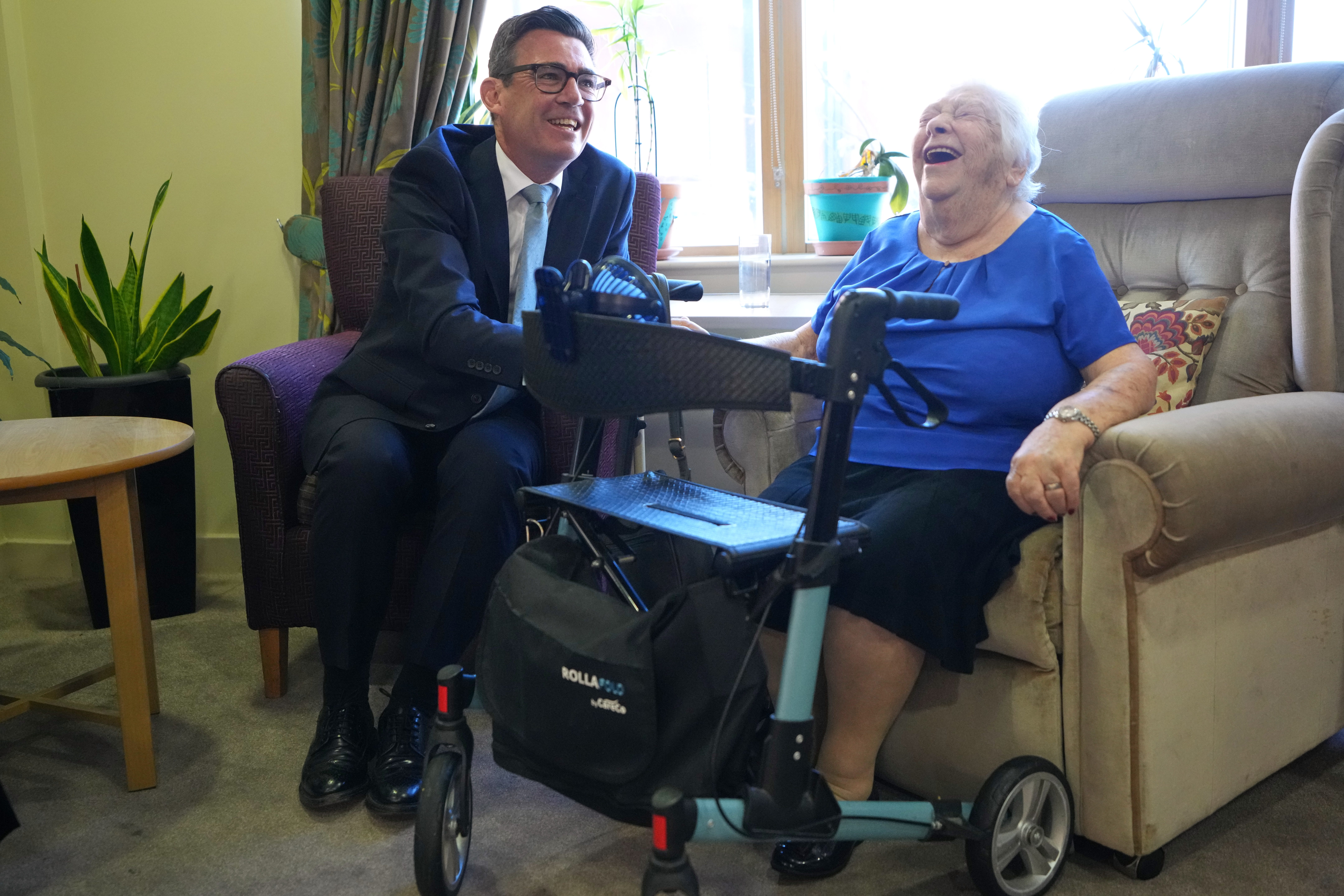
In England, two people can be diagnosed on the same afternoon, on the same ward, by doctors paid out of the same budget. One has cancer. The state meets the cost of all treatment that follows. The other has dementia. That person, in most cases, will pay for their care until their savings have been ground down to £23,250, at which point the state finally decides they qualify for limited help towards costs. Care won’t be provided free until their savings fall below £14,250 – and even then, if they need to move into a care home, they will have to sell their home to pay for it. The thresholds have not moved since 2010 despite the fact that a place in a care home now costs significantly more per year than the average salary. It is, quite frankly, a disgrace.
Back in 2010, when Andy Burnham was Gordon Brown’s health secretary, he proposed paying for universal old-age care through a levy on estates. He watched as the Conservatives christened it a death tax before an election buried the whole thing. Sixteen years and seven prime ministers later, Burnham was standing in a care home in London, once again talking about the need for a universal care system. He was speaking passionately without notes, becoming emotional when mentioning his father’s Alzheimer’s care. He called the failure of successive governments to deal with this issue a “major dereliction of public duty”.
He is right, but he is about to run into the same constraints that defeated every previous attempt: money, labour and political consent.
Any serious argument for reform has to begin with how badly the existing system is failing. Around 2 million people aged 65 and over in England are not getting the care they need; among working-age adults, the estimate is another 1.5 million. Roughly one in seven older people will face care costs of more than £100,000. Social care is less a safety net than a gamble. Develop the wrong illness, and a lifetime’s savings, including the family home, can disappear into care fees. Hugh Alderwick of the Health Foundation calls it a “threadbare safety-net system” and notes that the absence of any meaningful state protection against care costs makes England an international outlier (social care policy and funding are devolved in Scotland and Wales).
Burnham’s own formulation is as blunt: “I think social care in England is as unfair as American healthcare. The vulnerable pay with everything and it can completely leave them with nothing.”
The most immediate obstacle is cost. A full NHS-style National Care Service has been costed at something in the order of an extra £18.5 billion a year by the mid-2030s. Even a more modest plan – a cap on lifetime costs, a serious uprating of the means test, a fair pay agreement for care workers due in 2028/29 – runs to billions of pounds of recurring spending, the kind you cannot fund from efficiencies. Burnham’s answer was that the first task is “to do more with what you’ve got”, that the immediate workforce commitments “will be fully funded”, and that anything fuller “will require difficult decisions, but we will be honest with people about those”. In practice, that means higher taxes, more borrowing or cuts elsewhere. That moment of honesty has been scheduled for after the publication of Baroness Casey’s report next summer, which is to say comfortably distant from a general election.
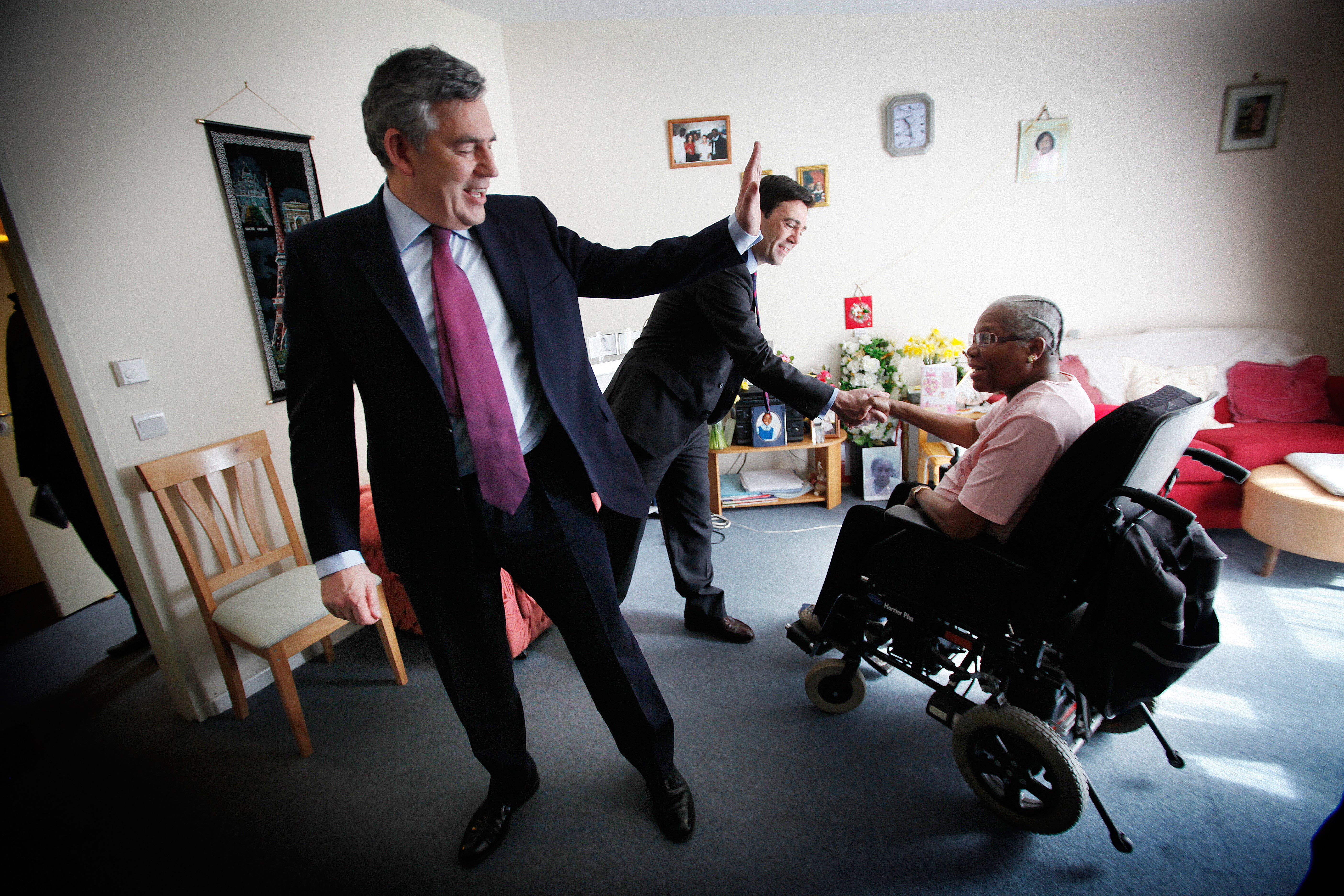
Money, however, is only part of the problem. The sector also needs workers. In February 2022, Boris Johnson’s government made care workers eligible for the Health and Care Worker visa. Care homes could not fill their rotas, so ministers opened an overseas route into work paying barely above the minimum wage and, at first, allowed applicants to bring dependants. Between March 2022 and March 2025, about 230,000 recent overseas arrivals entered care roles in the independent sector. As Alan Manning of the LSE has argued, this was close to a textbook example of how not to design a visa. Employers wanted migrant workers because pay and conditions were too poor to recruit and retain enough people domestically. Importing labour filled vacancies, but it did not fix the wages or conditions that created them.
Workers with a non-British nationality account for about 32 per cent of a workforce of roughly 1.6 million people. In its drive to cut net migration, the government closed overseas applications for new care-worker roles in July 2025; most new care-worker applicants had already been barred from bringing dependants from March 2024; and the government is now proposing to extend the route to settlement from five years to 15 for most care workers.
The stated rationale for the 15-year route is partly fiscal: ministers want to limit the number of lower-paid workers becoming eligible for state support after settlement. But it would also leave workers dependent on sponsored employment for longer and make it even harder to change jobs. The effect is to make Britain less attractive to people considering this work, at exactly the moment the prime minister wants to expand the service. There are already nearly 96,000 vacancies in social care, and the vacancy rate remains roughly three times that of the wider economy.
Angela Rayner, the current housing secretary, who was once a care worker, has already said the objection to these policies out loud: “If we’ve asked someone to come to this country to contribute and we set down those rules, I don’t think we should be retrospectively changing them.”
Ministers can promise no tax rises, lower migration and better social care. They cannot deliver all three without large cuts elsewhere.
Even if the money and workers can be found, reform still needs political consent. It is why the cross-party talks Burnham has initiated matter more than they first appear to. He has brought Casey’s final recommendations forward from 2028 to summer 2027, launched a national consultation, sat down with the Conservatives and Liberal Democrats, and chosen the point furthest from an election he is likely to get. The purpose is to find common ground. Ed Davey, the Liberal Democrat leader, who cared for his terminally ill mother as a teenager and now cares for his disabled son, came out of the call sounding genuinely hopeful and genuinely realistic. “We’re a long way off a plan,” he said, before stating what consensus actually requires: “Everyone will have to accept things we might not like in order to work together.” The Conservatives welcomed the cross-party talks, but their position is that while much more needs to be done to fix social care in England, there cannot be tax rises or increased borrowing. They agree they need to find common ground and argue it is a huge issue, but they are giving red lines without concrete alternatives.
The stalemate is already clear. Everyone agrees the system is broken. Everyone agrees on consensus in principle. No party has yet accepted the full cost of a viable solution.
Burnham is still right to try, but what is unusual is not that he has identified the failure, but that he has chosen to spend political capital on it early enough that he will have to defend the answer for years rather than weeks. He has also chosen an issue that has already burned him once, but says he is doing it for “my dad and the millions like him”.
But sincerity is not a funding model. Turning an emotional speech into legislation means confronting choices politicians have spent years avoiding: reform will require higher taxes, more borrowing or cuts elsewhere. It will also require an immigration policy that reflects the sector’s dependence on overseas workers, alongside better pay and conditions. Above all, opposition parties will have to stop pretending that reform can be free.
Britain may now accept that the social care system must be better. The unresolved question is who will pay, and whether politicians will tell them plainly.
Read more from Zeteo UK:


The problem is not fiscal restraints or costs. The UK is a rich country. It has access to all the resources that are needed. The problem is priorities. Country wide priorities. The priorities of the whole culture. If the highest priority is to keep the rich class happy, moral disgrace will continue to be the result.